
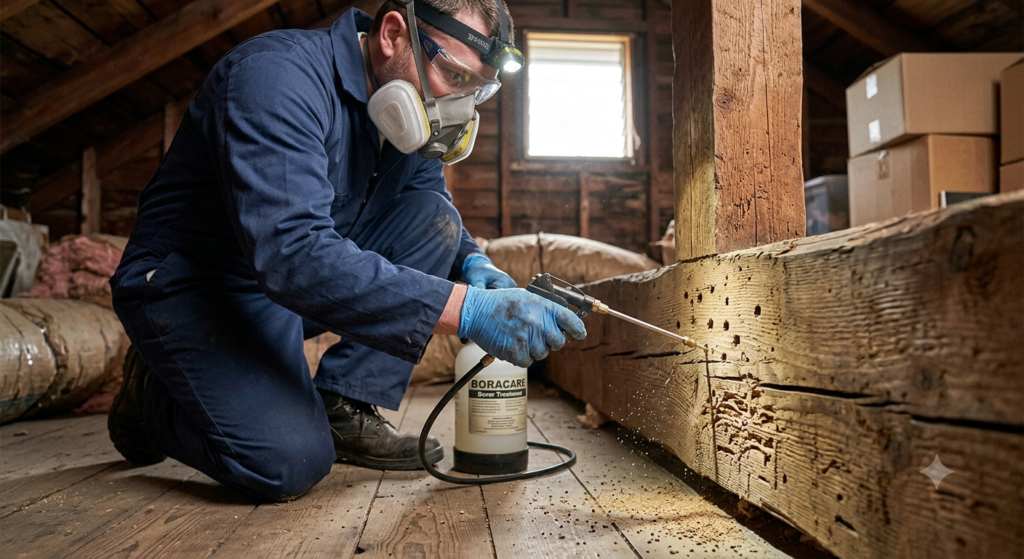
Wood-boring insects represent one of the most stealthy threats to structural timber, antique furniture, and wooden fixtures. Unlike surface-level pests, wood borers spend most of their lifecycles hidden inside timber, consuming cellulose and hollowing out internal structures before visible signs emerge. Early identification and targeted treatment are critical to preserving structural integrity and preventing costly architectural damage.
What Are Wood Borers?
“Wood borer” is a broad term covering several species of beetles whose larvae feed on and nest within wood. While adult beetles typically lay their eggs in small cracks or unsealed surfaces, it is the hatching larvae (grubs) that chew through timber, leaving intricate networks of tunnels in their wake.
Common Species Involved
- Common Furniture Beetle (Anobium punctatum): Prefers softwood and hardwood sapwood; responsible for most domestic furniture damage.
- Powderpost Beetle (Lyctidae family): Infests hardwoods like oak, mahogany, and ash; leaves behind a fine, talcum-powder-like dust.
- Deathwatch Beetle (Xestobium rufovillosum): Favors old, damp hardwoods (especially structural oak) suffering from fungal decay.
- Longhorn Beetle (Cerambycidae family): Prefers fresh timber and softwoods; creates larger exit holes and rapid structural damage.
Causes of Wood Borer Infestation
Understanding why wood borers target specific timbers helps homeowners and builders take proactive preventive measures.
- High Moisture Content: Wood borers thrive in damp, poorly ventilated environments (timber moisture content above 12–16%). High moisture softens wood and facilitates larval digestion.
- Unsealed Timber Surfaces: Bare, untreated timber provides an accessible surface for female beetles to deposit eggs in pores, joints, and cracks.
- Fungal Favorable Environments: Fungi weaken cell walls, making timber far more attractive and digestible to wood-boring larvae.
- Secondhand & Antique Furniture: Unchecked vintage items often carry active infestations into previously clean home environments.
Identifying the Signs of an Active Infestation
Because larvae develop inside the timber for anywhere between 1 to 5 years before emerging, early detection relies on subtle visual cues:
- Exit Holes: Small round or oval holes (1mm to 3mm in diameter) on the surface where adult beetles have emerged.
- Frass (Wood Powder): Fine dust beneath exit holes or under furniture, which is larval excrement pushed out during tunneling.
- Boring Dust & Crumbled Edges: Structural timber edges or furniture corners becoming powdery or weak under light pressure.
- Audible Ticking or Scraping: In quiet environments, the chewing sound of larger larvae (like Deathwatch larvae) can sometimes be heard.
Treatment Methods & Remediation Strategies
Selecting the right treatment depends on the severity of the infestation, timber depth, and whether the timber is structural or decorative.
1. Borate-Based Chemical Application
- Method: Aqueous borate solution sprayed or brushed onto bare, unsealed timber.
- Mechanism: The salt compound absorbs into the wood layers; larvae ingest the toxin as they feed, interrupting their digestive system.
- Best Used For: Sub-flooring, roof trusses, exposed beams, and untreated structural frameworks.
2. Targeted Fluid Injection
- Method: Chemical insecticide injected directly into active exit holes using a specialized syringe or pressure valve, followed by wax sealing.
- Mechanism: Fills existing galleries with insecticide to kill remaining larvae inside.
- Best Used For: Finished furniture, varnished wood, and localized infestations.
3. Thermal Treatment
- Method: Enclosing the infested wood in an insulated chamber and raising the internal core temperature above 56°C (133°F) for at least 30 minutes.
- Mechanism: Heat destroys insects at all life stages—eggs, larvae, pupae, and adults—without chemicals.
- Best Used For: Antique furniture, textiles mixed with wood, and chemical-sensitive environments.
4. Fumigation
- Method: Enclosing the structure or object in an airtight seal and flooding it with gas (such as sulfuryl fluoride).
- Mechanism: Gas penetrates dense wood cores to eliminate all biological life.
- Best Used For: Severe, wide-scale structural infestations or high-value museum collections.
Key Benefits of Professional Treatment
- Structural Integrity Preservation: Halts internal decay before load-bearing beams or joists collapse.
- Complete Lifecycle Eradication: Professional treatments target concealed eggs and deep-dwelling grubs, preventing re-emergence cycles.
- Property Value Retention: Eliminates pest issues that would otherwise fail building inspections or reduce resale value.
- Fungal Prevention: Modern chemical treatments often include fungicides that address timber rot alongside pest eradication.